Mieruka: when the Japanese factory won’t let you sweep a problem under the carpet
What is ‘mieruka’, the Japanese visual management approach that highlights problems rather than hiding them, and why it matters to companies that do business with Japan.
Imagine walking into a factory and, without asking anyone anything, knowing within thirty seconds which production line is behind schedule, which machine has broken down this morning and who is responsible for sorting it out. No meeting is needed, nor a report, nor waiting until the end of the month. That is, in essence, the logic behind mieruka (visualisation, literally «making visible»): a management principle widely used in Japanese industry that makes problems impossible to ignore. For any company doing business with a Japanese supplier or partner, understanding this mindset helps to explain why there is such a strong emphasis on visible data, shared dashboards and constant monitoring even before anything is signed.
From the Toyota factory to corporate culture
Mieruka has its roots in the Toyota production system, developed in the mid-20th century, and is closely linked to concepts such as kaizen (continuous improvement) and genchi genbutsu (going to the actual site and seeing with one’s own eyes). The underlying idea is simple but demanding: a problem that cannot be seen cannot be solved, and a problem that can be hidden will, sooner or later, be hidden. That is why, in many Japanese factories, production indicators, quality defects or delays are not kept in a restricted-access internal report, but are displayed on physical boards — the famous andon, with coloured lights indicating the status of each production line — visible to anyone passing by, including a visiting customer.
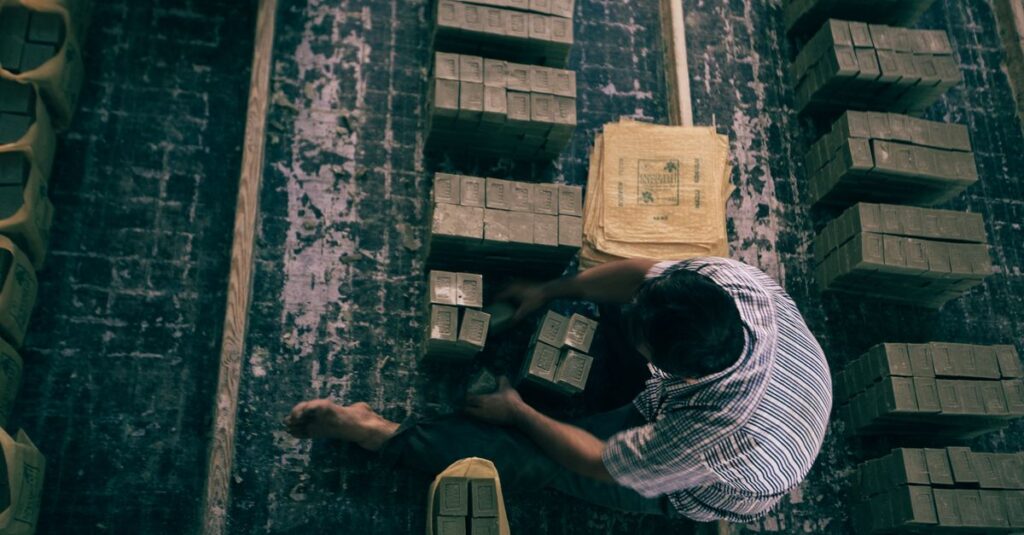
This practice is not limited to the heavy industrial sector. In the Japanese food industry, it is common to find noticeboards or screens on the shop floor displaying, in real time, the temperature of cold stores, the batches currently being processed, or any hygiene incidents detected that very day. In the cosmetics sector, where traceability and quality control are particularly sensitive issues, some factories prominently display the results of the latest internal audits, not as an exercise in external transparency, but as a mechanism for internal discipline: if the whole team can see the figures, no one can pretend that a problem does not exist.
It’s not about transparency, it’s about prevention
It is worth clarifying one point: the ‘mieruka’ does not stem from a desire for corporate transparency towards customers or investors, as might be interpreted from a European perspective on reporting or compliance. Its original function is internal and preventative. It is about reducing what is known in Japanese as ‘muda’ (waste) and, above all, preventing a minor fault from turning into a major one simply because it has gone unnoticed for days. A ten-minute delay on a production line, if recorded and made visible immediately, can be rectified that very afternoon. If it is buried in an incident report that nobody checks until the end of the month, it becomes a structural problem.
This has a direct impact on how Japanese companies manage their relationships with foreign suppliers. When a Spanish SME begins working with an importer or a manufacturing partner in Japan, it is not uncommon for it to be asked to share process indicators in greater detail and at a higher frequency than is usual in Europe: not out of mistrust, but because that is how trust is built in Japan. Showing the figures, including the bad ones, is seen as a sign of reliability; concealing or glossing over them generates more suspicion than the problem itself.
When a mistake is made, it is not punished
Another important point: in the culture of ‘mieruka’, admitting a mistake does not automatically mean facing a penalty. In fact, many Japanese companies carefully distinguish between a mistake that is concealed — which does provoke a severe reaction, as it undermines the group’s trust — and a mistake that is identified and communicated in good time, which is seen as a natural part of the improvement process. This distinction may seem counterintuitive to those coming from environments where openly acknowledging a problem is associated with weakness or an immediate reputational risk.
What does this mean for your business?
If your company works or is going to work with a Japanese partner, it is worth bearing in mind that sharing detailed process data — and being relaxed about mistakes — is valued more highly than always presenting flawless results. On Japopedia, you’ll find a directory of Japanese importers and distributors, as well as an AI tool specialising in trade between Spain and Japan, which will come in handy when the time comes to prepare for that conversation with clear and well-organised information.
More of Japan from the inside
← Back to the blog Tatemae and honne: the dual nature of all Japanese negotiations
What are tatemae and honne, and how can you tell them apart in negotiations with Japan so as not to confuse politeness with genuine commitment?.
 Why nobody in Japan leaves home without their loyalty card holder
Why do Japanese consumers accumulate so many loyalty cards, and what does this reveal about the retail sector and brand loyalty in Japan?.
 What Tokyu Hands and Loft teach us about product innovation
Tokyu Hands and Loft are Japan’s 'zakka' retailers: they stock thousands of highly specialised products that reveal how Japan identifies consumer needs.